ASBESTOS REGULATION COMPLIANCE CHECKER
 0191 419 3116




Anthony Carter CoCA
When people think about the dangers faced by British service members, they picture bullets, bombs, and battlefields. But there’s another deadly threat that’s been quietly claiming lives long after the fighting stops: asbestos.
More Deadly Than Combat
Between 2001 and 2021, 405 British troops died in Afghanistan due to hostile action. In that same period, over 3,500 veterans died from asbestos-related diseases such as mesothelioma and asbestosis.
That’s nearly nine times more deaths than from combat.
As a veteran, I’ve seen first-hand how quickly governments act on combat injuries, yet how slow they’ve been to recognise the silent killer that asbestos has become.
We didn’t sign up to be exposed to asbestos in our workplaces, and our families didn’t agree to carry the burden of an avoidable death.
Where the Exposure Happened
Many veterans were exposed to asbestos in:
- Old barracks and military housing
- Ships, submarines, and aircraft
- Tanks and armoured vehicles
- Maintenance and engineering roles
Although asbestos is banned in new construction, it still exists in legacy infrastructure.
Exposure didn’t end with service, it often followed veterans into civilian life. Standards of barrack accommodation have improved, but there are still areas that have been neglected.
The Latency Issue
Asbestos-related illnesses can take decades to develop. Symptoms may not appear for 20 to 60 years, and when they do, the prognosis is often poor.
Veterans from earlier deployments such as the Falklands, Northern Ireland, and early Iraq and Afghanistan, are now facing the consequences.
The Compensation Gap
Despite the scale of the issue, the support available to veterans remains disparate.
Although veterans diagnosed with mesothelioma due to service receive a £140,000 lump sum under the War Pension Scheme, civilian claimants often receive significantly more (sometimes exceeding £240,000) alongside legal support and broader access to treatment.
(MoD, AOAV Report)
While the War Pension Scheme provides vital support, aligning veteran compensation with civilian standards would reinforce the Armed Forces Covenant, which promises that no veteran should be disadvantaged due to their service.
There is an opportunity for the government to lead the way in recognising and addressing asbestos-related risks among veterans by reforming the compensation system to provide parity with civilians. Veterans and their families deserve better.
Where I’ve Seen It First-hand
In 2024, I travelled to Eastern Europe to conduct reassurance air tests inside large military hangars. The operation was part of a live training exercise, replicating high-pressure conditions similar to those faced during active service.
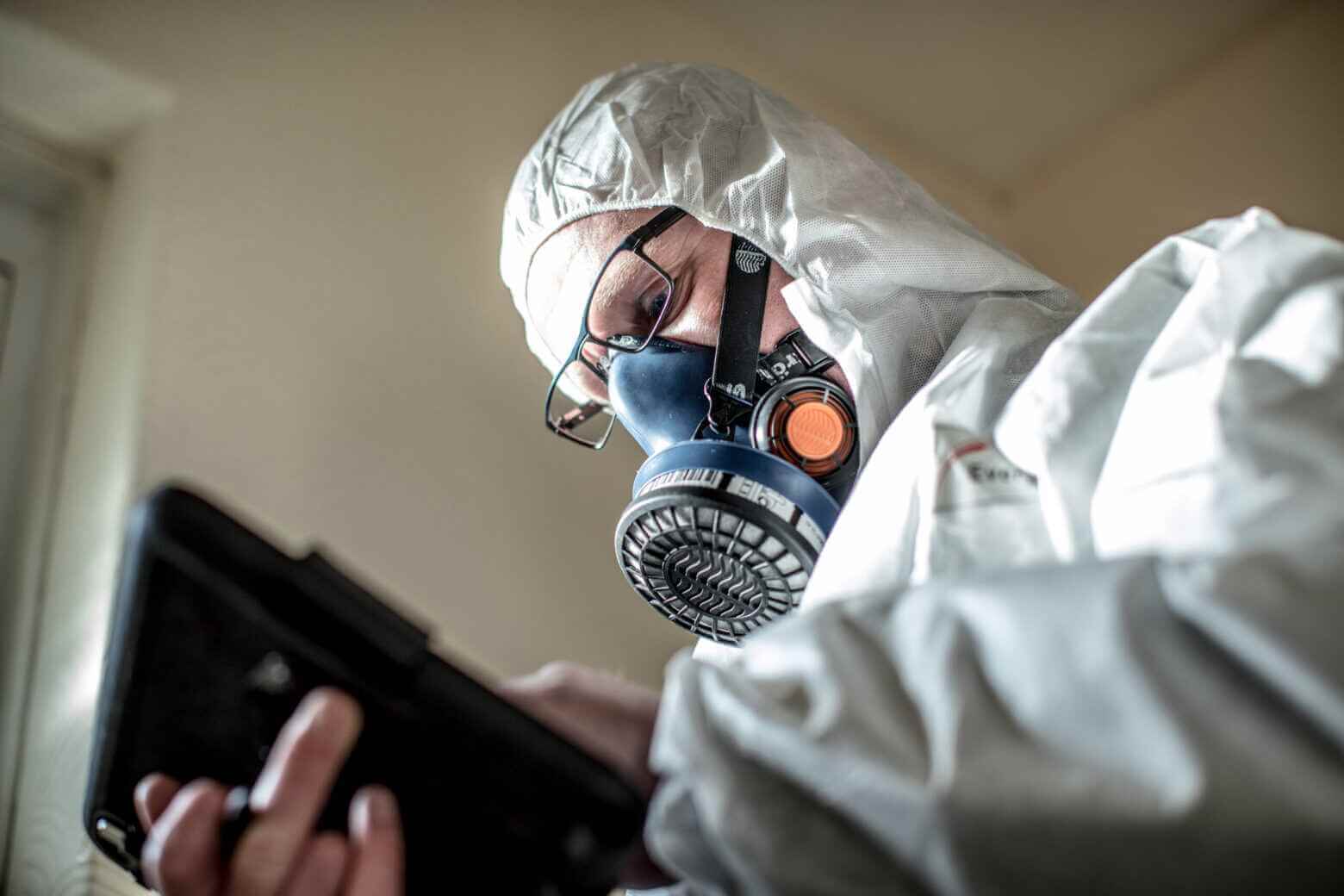
I felt at home. Missed the life. Missed the camaraderie. But the aim was to make sure the personnel on site were safe. I was wearing PPE and RPE but in the early 2000’s, I wasn’t. That contrast says everything.
What Needs to Change
The exposure has already happened. Now, the priority must be twofold: fair compensation for those affected, and proactive asbestos management to prevent further harm.
We need:
- Full recognition of asbestos-related deaths in the veteran community
- Parity in compensation between veterans and civilians
- Continued proactive asbestos management and removal from military infrastructure
- Routine health screening for serving personnel in line with current regulations for civilian workers undertaking licensed asbestos work under the Control of Asbestos Regulations 2012
The reassurance testing carried out in Eastern Europe is a reminder that asbestos risks are not confined to the past, they can still be present in active environments. We believe the MoD shares our commitment to protecting personnel and veterans from further harm, and the first step is to identify and manage these risks.
We’re dedicated to contributing to this effort across military and civilian settings.
Asbestos surveys, air monitoring, and risk assessments help build the evidence base needed to inform infrastructure decisions and supports routine safety protocols that should be standard practice.
While legislative reform is essential, it must be matched by practical, on-the-ground action to ensure no one is exposed unnecessarily.
Acknowledging past exposure is no longer optional; ensuring fair compensation and implementing robust asbestos management is the standard we must continue to uphold.
Anthony Carter CoCA
Regional Manager